
Top 10 App Ideas That Can Make Money in 2026 — And How to Execute Them
In 2026, the average person spends over 4.2 to 4.8 hours per day inside mobile apps worldwide. That is time, attention, and money moving through screens every single day. Apps remain top revenue generators because businesses follow attention, and attention now lives in pockets.
To help you hop on the opportunity wagon, we have brought here Top 10 App Ideas That Can Make Money in 2026 with details on how each earns money, who uses it, and what makes it work. We encourage you to acquire the knowledge, pick one idea, and start there. So, let’s begin!
1. AI-Powered Productivity App
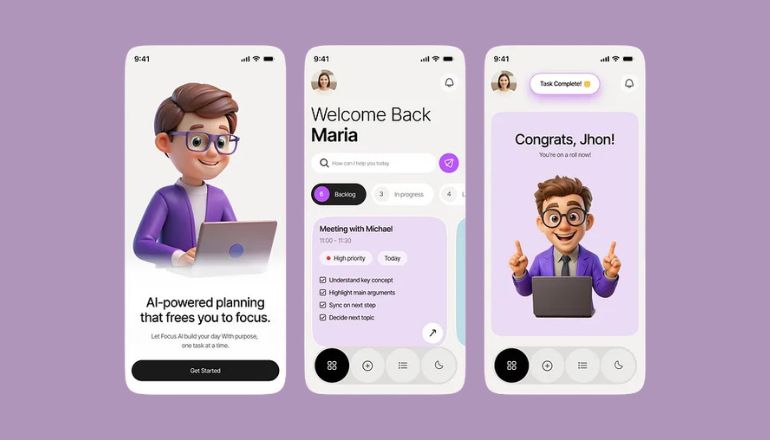
Your days are packed, deadlines slip through the cracks, and important meetings somehow vanish from your memory. In 2026, one of the profitable app ideas to make money is an AI-powered productivity app that fixes all of that by acting as your personal smart assistant.
As an entrepreneur yourself, you must be aware that businesses everywhere are aggressively buying AI tools right now. Consider these market numbers:
| Metric | Value |
|---|---|
| AI office software market value (2025) | USD 8.9 billion |
| Projected value (2034) | Nearly USD 35 billion |
| Annual growth rate | 16 percent |
| Productivity segment estimate (2034) | Nearly USD 35 billion |
| Segment annual growth | 16 percent |
Who Exactly Buys This App
Professionals with back-to-back Zoom calls
Students juggling five classes alongside a part-time job
Parents managing soccer practice and grocery runs
Anyone whose daily schedule resembles a chaotic plate spinning act
How the Money Flows
You give basic features away for free so people can experience the automation firsthand. Then you lock premium tools behind a monthly paywall:
Unlimited AI queries cost extra
Team collaboration features cost extra
Advanced project management views cost extra
Real Examples That Work Today
Notion: A strong example is Notion AI, the artificial intelligence feature built into Notion’s productivity platform. It allows users to summarize notes, generate content, and extract insights directly inside their workspace. Pricing varies depending on plan and team size.
Motion: An AI-powered calendar and task management platform that automatically prioritizes tasks and dynamically rearranges schedules when meetings change. This app auto-schedules your entire day. If a meeting moves unexpectedly.
Your Competitive Edge
Most productivity tools available today are certainly smart. But the next generation will feel eerily intuitive by comparison. The app will notice you focus best between 10 AM and noon, then automatically block notifications during those hours without you asking.
That kind of deep learning makes users stick around permanently. They feel genuinely understood rather than merely managed. And that is exactly what makes this one of the best app ideas 2026 that aspiring entrepreneurs like you can monetize and dispense to fellow hustlers.
2. Telehealth / Health Monitoring App
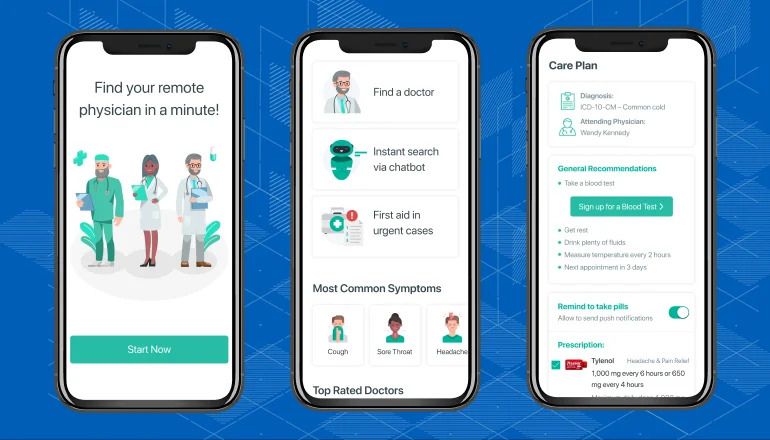
When you use a telehealth and health monitoring app, you essentially carry a clinic in your pocket. These platforms connect you directly with doctors through video calls while simultaneously tracking your vital signs like blood pressure, heart rate, or glucose levels.
This category consistently ranks among the most durable profitable telehealth apps heading into 2026, and the numbers explain exactly why.
| Metric | Value |
|---|---|
| Global telehealth market value 2025 | USD 186.41 billion |
| Projected market value end of 2026 | USD 219.31 billion |
| Forecast market value by 2034 | USD 1,272.81 billion |
| Compound annual growth rate | 24.60 percent |
Three Distinct User Groups Matter Most
Chronically ill patients
Elderly users
Fitness-oriented individuals
How Money Flows Through These Apps
Subscription plans grant you unlimited messaging and consultations for a flat recurring fee that feels invisible after a few months.
Pay-per-consultation works perfectly for people who need a doctor once or twice annually and prefer not to commit.
Apps That Prove the Model
Teladoc Health for example serves over 100 million Americans with 24/7 virtual care across thousands of organizations. On the flip side, MyFitnessPal tracks your meals, workouts, and water intake before pushing that data directly into Apple Health while communicating seamlessly with Apple Watch.
What Makes an App Truly Different
The best ones integrate deeply with whatever wearables you already own. The consumer might wear Garmin watches or attach continuous glucose monitors, and expect those devices to feed directly into the app without any manual entry on their part.
3. E-commerce / Local Marketplace App
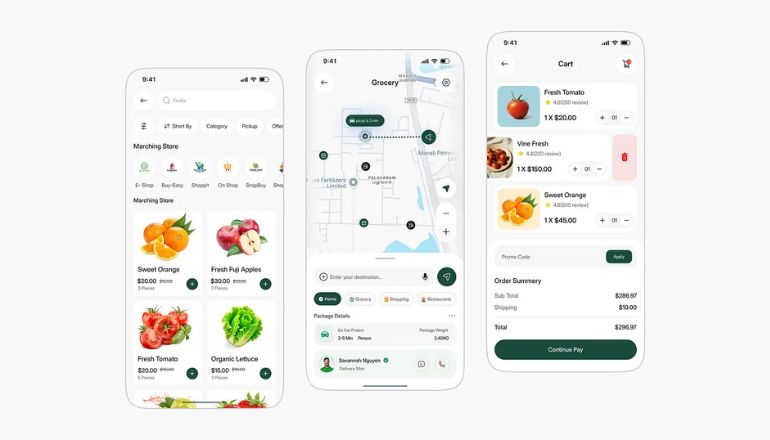
An E-commerce marketplace app either local or international, connects buyers and sellers, turning your phone into a digital flea market. According to a recent report, Android takes over 72.67% share for E-commerce app downloads.
Why It Makes Money in 2026
| Factor | Impact |
|---|---|
| Community commerce shift | People prefer buying from neighbors |
| Big box store fatigue | Impersonal experiences drive users away |
| Shipping delays | Instant local pickup beats waiting |
| Local economic impact | Younger buyers care where money stays |
Who Uses This App
Sellers get an easy outlet for clutter or side hustles. No Etsy fees. No Amazon complexity. Just list and sell.
Buyers hunt bargains on everything from baby clothes to power tools. They often score deals because sellers just want items gone fast. That psychology works in your favor.
How You Make Money
Commission cuts — Small percentage when something sells
Featured listings — Sellers pay to appear at the top of search
Verified badges — Monthly fee for local business verification
Category fees — Charge for high-ticket items where transaction values justify it
Apps Doing It Right Today
Local: Facebook Marketplace benefits from Facebook’s massive global user base, giving sellers access to millions of potential local buyers.
International: In the international market, major players like Alibaba, Amazon, eBay and more have survived by swift logistics, payments, and AI recommendations.
Your Competitive Edge
Build something better by engineering AI that studies user behavior. If someone searches for a humidifier once, your algorithm remembers. That predictive layer keeps engagement high because the feed always contains relevant local items.
Building these hyperlocal and consumer interest matching engines takes a lot more than just an idea.
4. Fitness and Wellness App
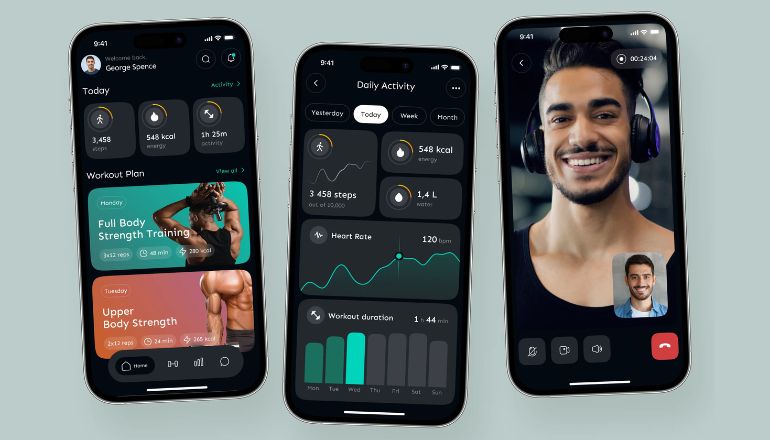
A fitness and wellness app works like a personal trainer who never sleeps and a meditation teacher available at 3 AM. It tracks your progress automatically. Some versions even suggest workouts based on how you felt yesterday.
The wellness economy now includes millions who never stepped inside a gym before 2020. And users want convenience without sacrificing quality.
Who Uses These Apps
Gym regulars use the app for rest days or travel
Office workers take five-minute meditation breaks
Parents appreciate fifteen-minute equipment-free workouts
Older adults find gentle movement programs for joint health
College students access free versions while saving for premium guides
How Money Comes In
Subscription fees grant access to advanced workout libraries. FitOn offers free classes while charging for personalized meal plans.
In-app purchases let users buy programs for specific needs without committing to full subscriptions.
Calm app built a billion-dollar business selling annual subscriptions for sleep stories and guided meditations.
What Makes Your App Different
Gamification transforms exercise into competitions. Your app can offer:
Digital badges for completing seven days in a row
Achievement unlocks for trying new workout categories
Leaderboards showing how your steps compare with friends
Recognition systems celebrating consistency
These will work because reward systems tap into human nature. People naturally open apps that make them feel accomplished, and that feeling drives long-term retention. This concept positions fitness apps among profitable mobile app ideas that make money because motivation remains the hardest problem to solve in wellness.
5. Subscription-Based Learning App
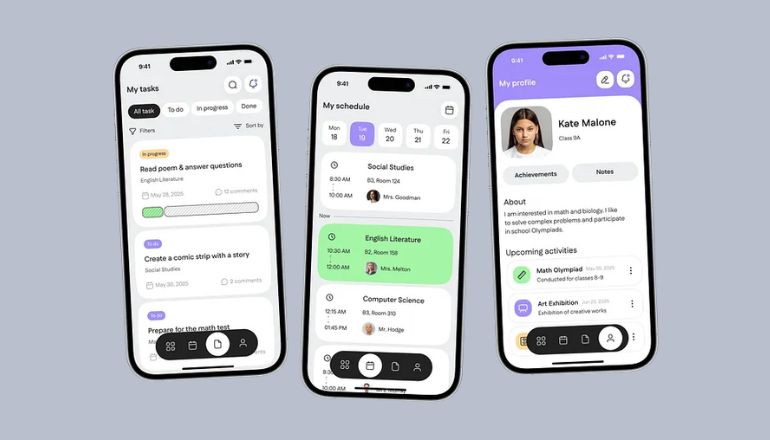
A subscription-based learning app packs video courses where people learn specific things. All content sits on phones, so users watch whenever they have time. This is practical skill training made for adults with busy lives.
Why It Is Profitable in 2026
The online education market is projected to reach US$221.71bn in 2026 according to Statista. Now, people need new skills because jobs change fast. Even companies also pay for these apps, putting money into training without building courses themselves.
Target Audience
Career switchers who want different work
Hobbyists who want weekend skills
Professionals who need to stay relevant
Corporate HR departments who pay for team access
Young adults and adults who buy most subscriptions here
Monetization Options
Tiered subscriptions work cleanly:
| Tier | Access Level | Typical Pricing |
|---|---|---|
| Basic | Some courses | Lower monthly fee |
| Premium | Everything plus live features | Higher monthly or annual fee |
| Annual | Full access | Discounted yearly rate |
Example Apps
MasterClass puts famous people on screen teaching what they know
Skillshare runs thousands of creative classes
Coursera connects universities to students wanting certificates
How to Differentiate?
You can add community learning by letting students talk to each other and share work. Live sessions with actual instructors make a real difference. This hybrid format keeps subscriptions active month after month, making this one of the stronger app ideas to build right now.
6. Finance and Budgeting App
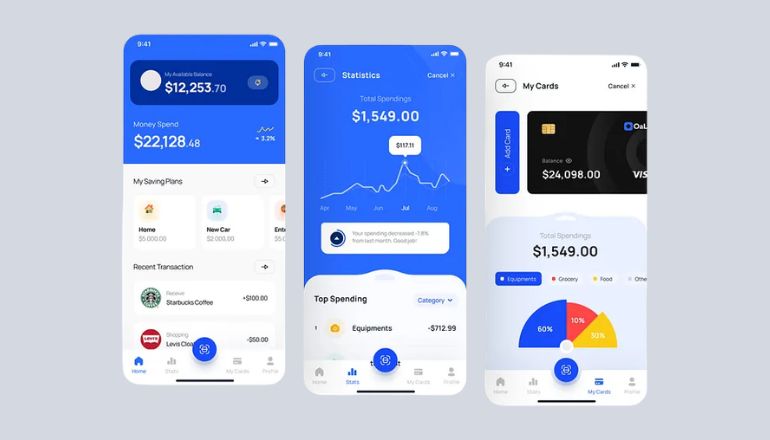
When you connect your bank accounts, every purchase appears neatly sorted into categories. The app simply watches your money move and tells you exactly where it went.
| Core Feature |
|---|
| Expense tracking |
| Savings goals |
| Investment connections |
Why 2026 Makes This Profitable
As an entrepreneur, targeting Gen Z could be your golden ticket to success because of their digital literacy. Gen Z wants independence because they watched older generations struggle with debt and inflation. They have side hustles, Roth IRAs they opened themselves, and detailed spreadsheets. They distrust traditional banks, so they turn to apps instead of advisors according to YouGov.
Who Uses These Apps
| User Group |
|---|
| Young adults |
| Couples |
| Middle-aged parents |
| Freelancers |
How the App Makes Money
The freemium pattern works consistently for finance apps as its free version shows spending and basic categories and the paywall only appears for custom budgets, deeper insights, or connecting more accounts.
YNAB charges an annual fee because this attracts a pay and forget customer while PocketGuard keeps basic free and premium unlocks predictive analytics.
What Should You Do Differently
Generic apps track history but smarter AI empowered ones in 2026 could predict what the target customer will spend next week. Now, you can use AI to your advantage. For e.g:
Standard app: “You spent $X on groceries last month.”
AI-powered app: “Your grocery spending is trending up. Three cheaper stores near you have eggs for less. Want to adjust your budget?”
Building Something This Complex
Finance apps require serious backend work.
Required expertise:
Secure API integrations with financial institutions
Bank-level encryption and data protection
Regulatory compliance knowledge
AI training on anonymized spending data
Finance applications require expertise in secure API integrations, regulatory compliance, encryption standards, and AI modeling to ensure user trust and legal alignment.
7. On-Demand Services App
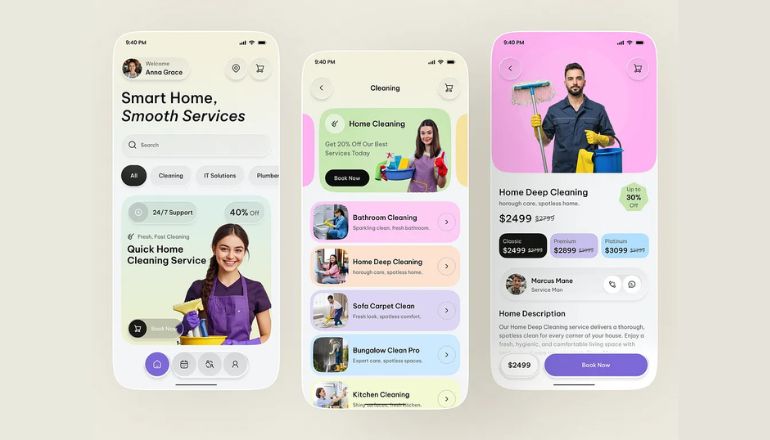
Imagine your Sunday evening disrupted by a plumbing emergency. You need help immediately. This explains why on-demand services apps have become essential. These platforms connect people requiring urgent assistance with local professionals ready to provide it.
According to data from the U.S. Bureau of Labor Statistics (BLS), full-time Americans work an average of over eight hours per weekday. When something breaks, people pay for solutions by sacrificing free time. You are selling time and delivering peace of mind. This behavioral shift positions on-demand services among the most viable app ideas for entrepreneurs today. You are not simply offering a booking platform. You are selling time itself and delivering peace of mind with every completed task.
Who Uses These Apps
| User Type | Common Scenarios | Why They Return |
|---|---|---|
| Homeowners | Emergency repairs, deep cleaning | Reliability during crises |
| Parents | Babysitting, tutoring | Safety of verified providers |
| Students | Last-minute exam prep | Immediate academic help |
| Professionals | Errand running, grocery delivery | Time savings |
Revenue Structure
Commission model. You retain a percentage from each completed booking.
Service fees. Customers pay convenience charges covering matching technology and verification.
Apps That Validated the Model
TaskRabbit and Thumbtack validated customer convenience and experience because users willingly pay premiums for speed and security.
Competitive Advantages You Can Use
Instant provider matching cannot mean thirty-minute delays. The system must connect users with available professionals within seconds using real-time location data and availability tracking. When someone books a plumber at midnight, the confirmation should arrive immediately.
Comprehensive provider verification separates trustworthy platforms from risky alternatives. Background checks, identity confirmation, and skill assessments must precede every professional’s approval. Because users accept higher prices when they know vetted strangers enter their homes. They abandon platforms that compromise safety.
8. Gaming App With In-App Purchases
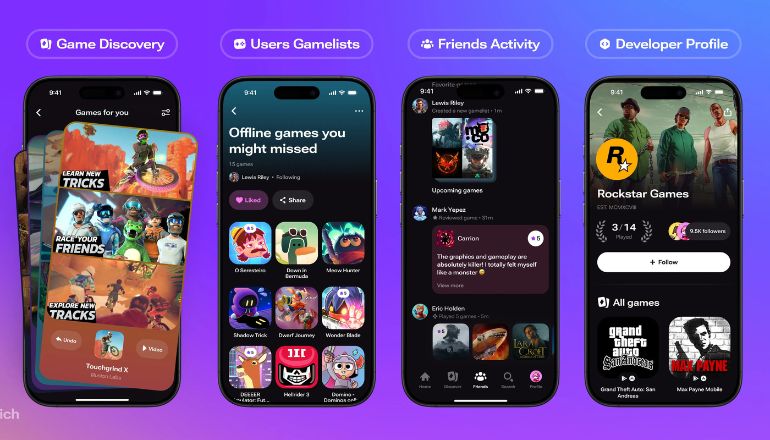
Gaming apps with in-app purchases are casual games you can download for free. The gameplay is simple, you might swipe, tap, or drag objects on the screen. There is zero barrier to entry; you simply start playing. Underneath that simplicity, developers build systems that keep you coming back through:
Daily rewards that incentivize logins
Limited-time events creating urgency
Collectible items encouraging completionism
Why It Is Profitable in 2026
According to market research firm Newzoo, mobile gaming generated over $100 billion globally in 2025. Players have gotten comfortable spending over time and so paying for mobile games now feels completely normal for avid gamers.
Target Audience
Casual gaming audiences are incredibly wide, from young children to retirees. The games do not demand skill or time commitment, so anyone can participate.
Age distribution: Spreads evenly across decades
Gender split: Balanced between men and women
Spending habits: Some never pay, others spend hundreds monthly
Free players fill the servers while paying players fund development and so both groups should matter for anyone planning to create a gaming app.
Monetization Options
Two revenue streams dominate.
In-app purchases come in several forms:
-
Consumable items disappear after use: E.g
Extra lives
Boosters for temporary advantages
Energy refills
-
Non-consumable items stay forever: E.g
Character skins
Level packs
Ad removal
Time-limited offers like season passes let you pay once and unlock content gradually by playing.
The second stream is
Advertising: Rewarded video ads work best, the target audience watches 30 seconds and gets something valuable. Some players accept to watch, and some prefer paying to stop the ads.
Example Apps
Among Us shows how simple games can explode. The premise is basic, crewmates complete tasks while impostors sabotage. Monetization came through cosmetic hats, pets, and skins that affect nothing in gameplay but everything in expression.
Subway Surfers launched in 2012 and still generates revenue through characters, hoverboards, cosmetic upgrades, and mystery boxes. The game updates constantly with new cities, so players return monthly.
Unique Value or Differentiation
Social gameplay elements separate successful games from forgotten ones. You can use these ideas if you decide to go with building a gaming app:
Leaderboards show where friends stand, driving competition.
Clan systems create belonging by letting you contribute points and unlock rewards together.
Cooperative events require teamwork through quick chats or emotes.
Social play habits drive long-term retention because players stay when others stay. The game becomes a socializing place, not just an activity.
9. Social Community App for Niches
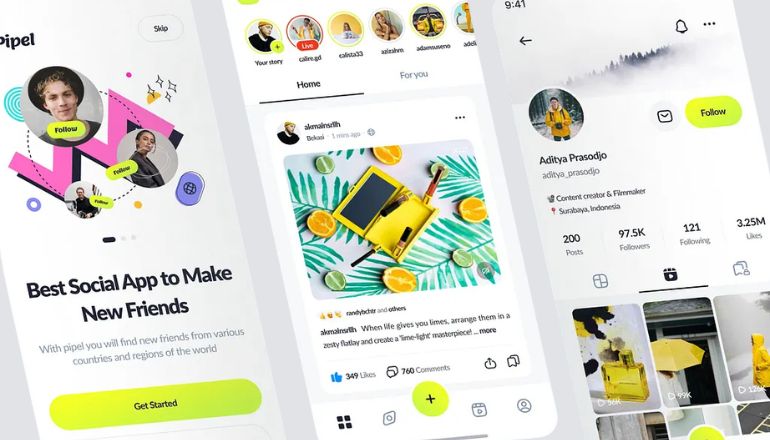
These apps cater to people who care deeply about one thing, books, pets, gardening, or vintage motorcycles. On general social networks, these conversations drown in noise. And so a niche community app solves the problem by connecting users who share similar interests.
Why This Belongs on Your List of Profitable App Ideas
Loneliness is expensive while genuine connection remains scarce. Companies now deploy these platforms because engagement jumps significantly when users feel part of something. The social networking market will reach USD 210.66 billion in 2026.
How Successful Apps Monetize Today
Goodreads, a book-focused social platform owned by Amazon, allows readers to log books, share reviews, and join niche literary communities. The revenue flows from premium author accounts.
Common monetization methods:
Premium memberships with exclusive content
Tiered access to expert community members
Private group features for subscribers
Early access to community events
Your Differentiator Matters Most
Your competitive edge lies in safety features as users pay for peace of mind. You should work on implementing real-time content flagging with team review. In addition, building automatic moderation that catches problems before members see them is also a viable feature you should include. When members feel protected, they invest their time freely. They invest their money next.
10. AR / VR Experience App
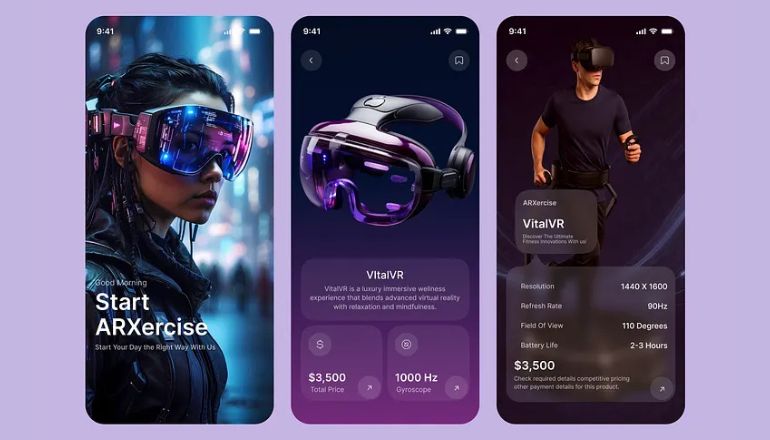
Augmented reality and virtual reality apps take digital content and drop it into your actual surroundings. They also build entirely fake worlds you can step inside. The tech works through your phone camera or those clunky headsets some people own, turning ordinary decision-making into something almost magical. According to a report, the AR VR market has hit $26.9B in 2026 growing at a 31.67% annual growth rate through 2031, with retail applications leading consumer adoption.
Who Uses These Apps
Online Shoppers: People buying furniture, clothing, or home goods want confidence before spending money.
Real Estate Professionals: Agents selling houses to people who never set foot inside need better tools.
Educators and Trainers: Schools need better ways to teach complicated subjects.
Early Adopters: People bought smart glasses and now those devices sit in drawers because nobody built apps for them.
How You Make Money
| Monetization Method | How It Works |
|---|---|
| Paid app download | Users pay upfront to install |
| Affiliate marketing | You earn commissions when users buy products they visualize |
| In-app purchases | Users buy premium filters, objects, or features |
Apps That Already Do This
IKEA Place changed how people shop for furniture by letting you see the actual sofa at actual size with actual lighting in your actual room.
What Makes Your App Stand Out
Real-time rendering quality will make users believe what they see, or they will not trust your app enough to make purchasing decisions.
Social proof integration helps build confidence faster like seeing product reviews floating next to the virtual couch you are considering.
Comfortable extended wear design makes users thank you for prioritizing their comfort over flashy effects.
To turn your AR VR app idea into something people actually use and pay for is often accomplished by diligently hiring the best mobile app development company. These experts handle complex technical requirements from 3D rendering optimization to cross-platform compatibility.
How to Monetize Top 10 App Ideas
You have an idea, so now you need money coming in not later but from day one. Your choice of monetization changes everything about how users experience your app and whether they stick around. Below are six ways apps actually make money right now with real examples and real numbers.
Freemium
| Aspect | Description |
|---|---|
| How it works | Give the app away free, let people use it and love it, then ask for money. |
| Real example | Spotify does this perfectly by letting millions stream music with ads interrupting every few songs. |
| User behavior | Some people get annoyed enough to pay, and those users get clean audio, downloads, and no interruptions. |
| Best for | Productivity apps do this along with fitness apps and learning platforms. |
The free version becomes your marketing with this approach. You give value first, then you ask for payment second.
Subscription
The model: People pay you every month or every year with automatic charges creating recurring revenue.
The proof: Netflix took this model and built an empire on it since users often forget they are even paying until the credit card statement arrives.
The benefit: For you this means predictable income, and for users it means continuous value.
Ideal candidates: Health monitoring apps work this way along with finance apps and niche communities where people actually know each other.
Subscription works when people need you next week and next month rather than just today.
Ads
Someone else pays you to show their stuff to your users.
YouTube plays a commercial before the video you actually wanted. You watch it so Google gets paid, and you get YouTube for free in exchange. The trick is balance because too many ads make people leave while just enough makes them tolerate it.
Gaming apps mastered this with free games and ads between levels. Users accept the trade since they paid zero dollars.
In-App Purchases
The formula: Download free, play free, then hit a wall.
Candy Crush Saga, developed by King, popularized the micro-transaction model in mobile gaming. The app executes this perfectly: You run out of moves so you want five more, and you pay one dollar which feels small but adds up huge. Virtual goods, extra lives, and special features all work here.
| Primary users | Secondary users |
|---|---|
| Gaming apps own this model | Fitness apps sell workout plans this way |
| Core gameplay relies on it | Learning apps sell advanced courses similarly |
The app becomes the storefront and purchases become the product.
Affiliate Marketing
You recommend stuff so people buy stuff and the company pays you commission.
Amazon built the biggest affiliate program anywhere, and review apps use this along with fashion apps and niche communities for hobbyists. Someone reads your gear guide, clicks your link, buys a tent, and you get paid without inventory or shipping. Just honest recommendations that actually help people.
Paid App
People hand over money before they see anything with one time payment and done. Headspace built its meditation platform using a freemium subscription model, offering limited free content while charging for full access to guided programs and courses. This only works when your app solves a clear problem immediately with:
AR experiences
Specialized productivity tools
Niche solutions that have no free alternatives
Paid apps succeed when they deliver immediate, high-value solutions that users are willing to pay for upfront.
Most successful apps combine two or three models since smart monetization feels natural rather than greedy. Professional app development services build these systems from the start with payment gateways, user accounts, and trial periods all working together while making you money while you sleep.
How to Choose the Best App Idea for You
The Top 10 App Ideas sit in front of you and all could make money, but which one should you actually build? The answer depends on you, your situation, your money, and your time. Here is how smart founders decide.
Step 1: Evaluate Market Demand
| Action | Purpose |
|---|---|
| Open Google Trends and type in your idea category | See if interest is growing or declining |
| Go to Reddit and search your topic | Read complaints not praise |
| Count how many describe the same problem | Measure market size |
If hundreds of people describe the same problem daily, you have a market waiting for a solution.
Step 2: Analyze Competition
Download every app similar to your idea and use them for one week. Then read their App Store reviews sorted by lowest rating first. Ask yourself:
What do people hate?
What features are missing?
What bugs never get fixed?
Those reviews become your product roadmap because competitors with bad reviews are not obstacles but invitations.
Step 3: Assess Your Budget Realistically
Simple apps cost less while complex apps cost more, which is obvious but here is what people miss. A simple app done well beats a complex app done poorly every single time.
The MVP approach:
Start with what you can afford
Launch
Make money
Build more later
Smart developers call this Minimum Viable Product with maximum learning.
Step 4: Understand Technical Requirements
| If your idea involves | You need |
|---|---|
| AI features | Machine learning people |
| AR/VR experiences | 3D developers |
| Health data | Security compliance |
Step 5: Consider Time to Market
It takes 3 months to launch a simple app but 8 months for complex platforms. That is the reality. If you need revenue faster, pick a simpler idea first. Build something quick, prove it works, then go bigger with profits already in your account.
Step 6: Match with Your Passion
You will work on this for months or maybe years, and if you do not care about the problem, you will quit when things get hard. Things will get hard so choose something connected to your life, your job, or your hobby because that connection carries you through frustration.
Step 7: Prioritize Monetization Potential
Now look at money again since some ideas naturally earn more than others. Balance what you love with what actually pays bills because the best app ideas 2026 live at that intersection between passion and profit.
That is where you should build.
App Building Takes More Than Just an Idea
When building an app, a great idea alone guarantees nothing, since the difference between a concept that generates income and one that remains dormant lies in execution. You now have a list of app ideas that make money along with the knowledge required to monetize them, so the next step is yours entirely. You should choose the idea that aligns with your passion and market research.
Ready to build your profitable app? Our experienced team turns ideas into successful products, whether you need guidance on features or full-scale development. We are here, so contact our app development agency today and let us bring your vision to 2026, because the market waits for no one.
Frequently Asked Questions
Q: What kind of apps make the most money?
Apps that solve recurring problems or fulfill daily needs tend to generate the most income, including productivity tools that save time, health apps that track vital information, and on-demand service platforms that connect users with providers.
Q: Do I need an LLC to start an app?
No, you do not need an LLC to build and launch an app, as many successful applications started as solo projects by individual developers. However, forming an LLC or similar legal structure becomes important once you generate revenue or accept payments. Consult a legal professional, and they will help you determine the right timing for your situation.
Q: What are the top 3 most used apps?
Recent usage data shows TikTok leads globally, followed by Instagram and WhatsApp for daily active users. However, this could be attributed to the volume of users rather than a set target audience.
Q: What kind of app should I make to earn money?
Build an app in a niche you understand personally, since domain knowledge gives you insight into what users actually need versus what you assume they want. For earning potential, look at categories where users already pay for solutions.