
There are situations when as a founder you face a deadlock, for example: you build an app, you get downloads but no revenue or growth, just a product that costs thousands to build yet earns nothing back. That is what happens when monetization becomes an afterthought rather than a foundation.
There are three revenue models that exist for apps. One: Freemium app model that lets users start free then pay for extras later, while the second: Subscription app model charges regularly for ongoing access. Meanwhile, the third model: In-app ads revenue pays you when users view advertisements during their session. Each generates serious money, but only when matched to the right app, audience, and moment.
This blog explains the differences between the three app revenue models. You will see real examples, compare tradeoffs, and pinpoint the best monetization model for apps, your specific idea demands. Let's start!

What is App Monetization?
App monetization simply means how your application makes money. Think of it as your revenue engine, the mechanism that turns users into income. Some apps charge directly, others sell access, and some show advertisements.
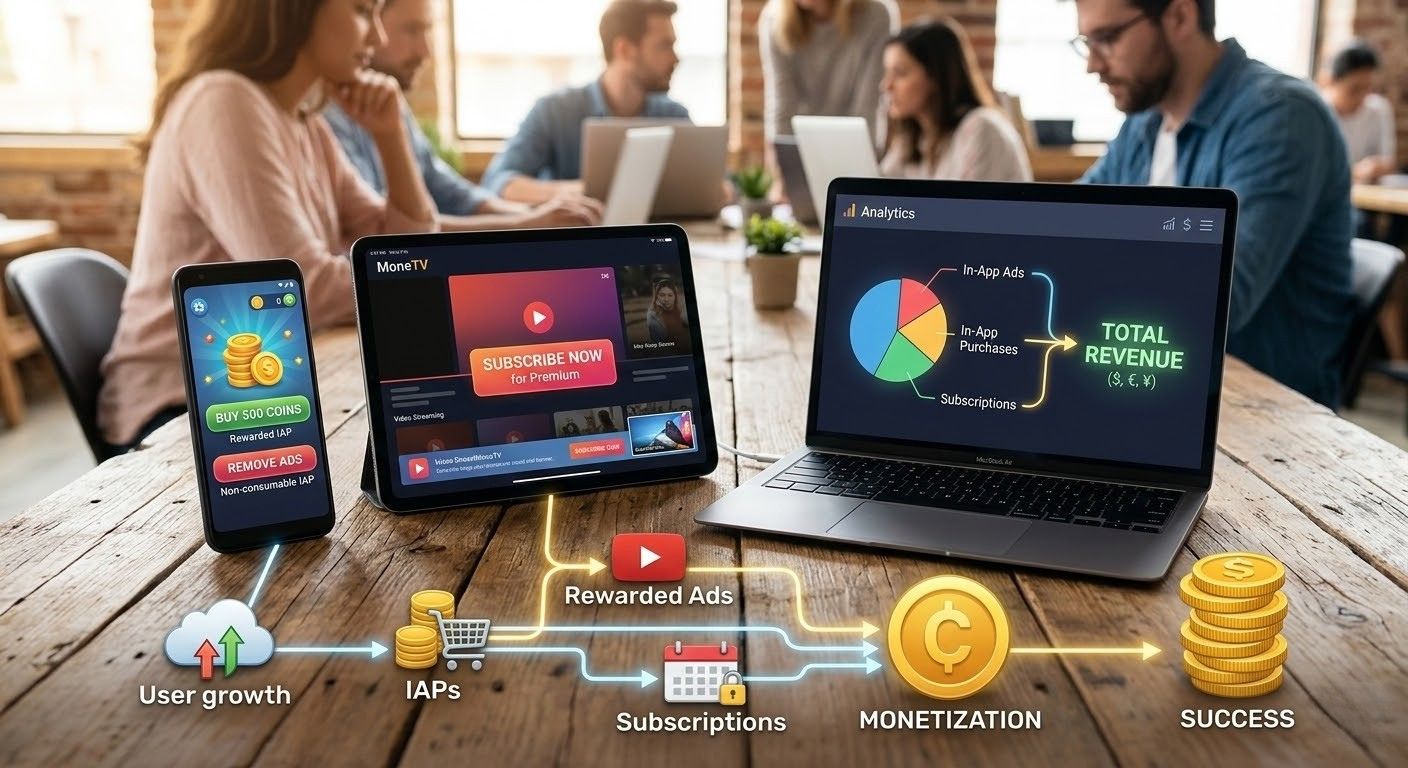
But here is what most founders miss: how to monetize an app must be decided before any code gets written. Not during development, not after launch, but before. If you change it later you are basically risking major codebase rebuilds.
Why Monetization Strategy Must Be Planned Early
Here is why planning early matters:
Your monetization model affects user signup flows, what features you build, how data flows, even which buttons appear on screen
Change your model later and you rebuild. The entire application from nothing
Choose wrong and users feel alienated by unexpected paywalls or annoying ads, so they simply leave
Pick poorly and your growth stalls because your revenue model fights your audience instead of serving them, which is why choosing the right development framework matters from day one
What Is the Freemium App Model?
You give your app's basic tools for free and keep the premium safe for paying buyers. After playing around for free, some serious users will eventually hit a wall: they want more storage, better features. Of those users reaching limits, 2-5% convert to paid. This simple dynamic, repeated millions of times across countless apps, defines the freemium app model in its truest form.
Where It Works Best
Productivity tools: Casual users jot notes but professionals need to search across thousands of documents.
Learning apps: Someone practices Spanish five distracted minutes daily but another wants advanced lessons without advertisements interrupting flow.
Utilities: Basic cleaning helps enough but deep optimization costs reasonable money.
Creative platforms: Where hobbyists tinker for fun but professionals build careers on premium features.
Check out our research on top 10 profitable app ideas to see which apps are making real revenue.
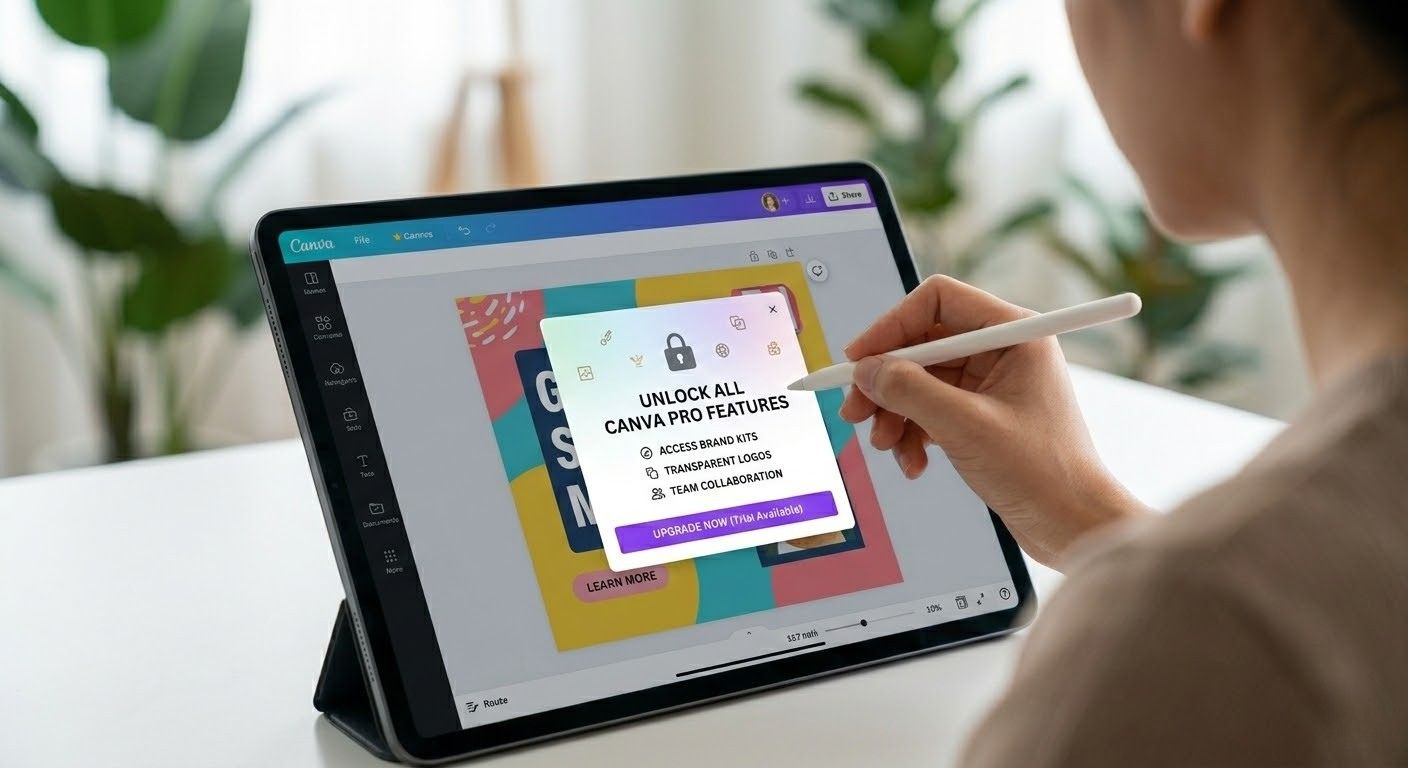
A good example of an app utilizing the Freemium model is Canva, a famous creative editing tool. Anyone designs social graphics for free, with thousands of templates existing and design tools working smoothly and exports happening instantly.
But businesses need brand kits with consistent colors and fonts, they need transparent backgrounds for professional logos, and they need team collaboration where multiple people edit simultaneously.
Those features sit behind premium walls, visible but inaccessible, tempting daily and that's where money is made. Canva grew to massive valuation without charging casual users a single cent, ever, not once.
Freemium: Pros and Cons
Pros:
Lowest user acquisition cost among all models, literally zero spend possible
Viral growth potential through free user sharing, exponential curve if you nail it
Massive scale builds brand awareness quickly, recognition follows downloads
Low barrier entry attracts maximum downloads, everyone feels welcome
Cons:
Free users churn within the first week, gone and never seen again
Server and support costs for non-paying users add up, real money leaving monthly
Conversion rates hover between two and five percent, a hard ceiling seemingly
Balancing free value against paid features requires constant tuning, endless adjustments
The tension never disappears and never resolves completely. You balance giving enough value to attract users while holding back enough to justify upgrades. Give too much and nobody pays, but give too little and nobody stays. If you get the balance wrong either way, the model collapses entirely.
Building the Strategy
Gated premium features that earn you money require thoughtful planning and design. You need custom app development that distinguishes free users from premium. The upgrade path must be designed in a way that feels obvious and natural, never aggressive or pushy, while the premium features must justify payment without making free versions feel broken or useless.
What Is the Subscription App Model?
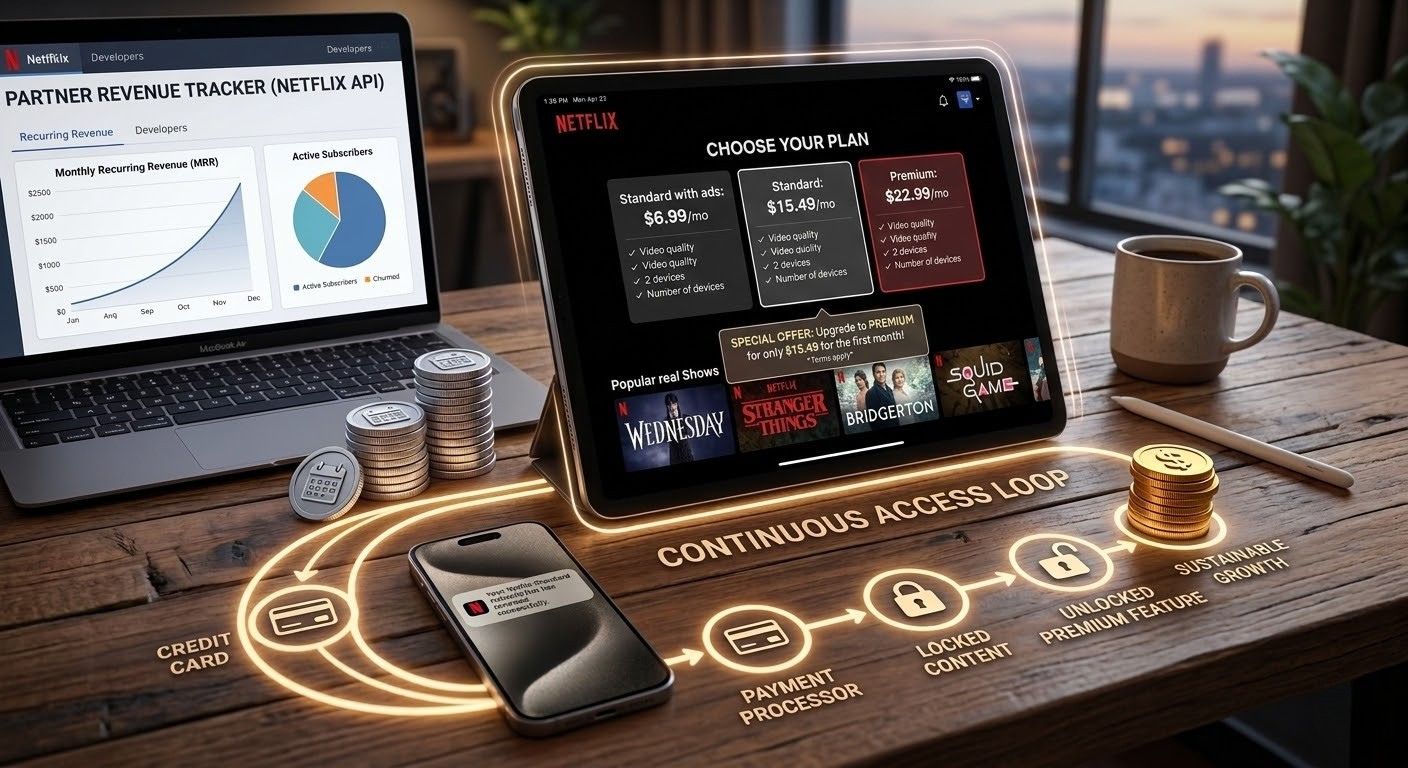
With the subscription model, users pay again and again, every month or every year, to keep accessing your app. They swipe their card once, access continues, until they unsubscribe. This recurring payment cycle, automated and repetitive, defines the subscription app model in practice.
Statista reports subscriptions now dominant in all non-gaming app revenue globally. The model works because users pay for ongoing value rather than one-time purchases, meaning you deliver content continuously, fix bugs constantly, add features regularly, and users pay for that sustained relationship.
Where Subscribers Say Yes
Apps providing ongoing value that never depletes
Services with fresh content added regularly, weekly or even daily
Software requiring continuous updates and maintenance
Platforms where users build history or progress over time
Subscription: Pros and Cons
Pros:
Predictable monthly recurring revenue, reliable and forecastable
Higher customer lifetime value than one-time purchases
Deep user relationships develop over months and years
Regular engagement data reveals user behavior patterns
Cons:
High churn risk constantly draining users
Acquisition costs run higher since subscribers must justify recurring spend
Users cancel immediately if value perception drops even slightly
Payment failures happen regularly, cards expire, accounts lapse
This constant tension between acquisition and churn never resolves completely since you pour money into marketing while money leaks out through cancellations. With so much at stake, it becomes critical to hire a professional mobile app development company that builds backend architecture.
Which processes recurring payments reliably, handles proration when users upgrade or downgrade, and manages subscription analytics tracking churn and retention accurately. Without this foundation, subscription models fail at scale.
App That Nailed It
Netflix mastered this model completely by charging users monthly while providing content that gets updated weekly and allowing binge watching. There are no advertisements that interrupt viewing and no extra purchases are required, just one predictable charge and endless entertainment. Netflix now generates billions in annual revenue from subscribers who forget they even pay until the charge hits each month.
Best Fitting Categories
Fitness apps where workouts update constantly and progress builds over time
Streaming services with content libraries expanding weekly
News platforms publishing stories continuously throughout each day
B2B SaaS where businesses depend on software for daily operations
Productivity tools where teams collaborate and data accumulates centrally
What Is the In-App Advertising Model?
You show advertisements inside your app to users going about their day, and companies pay you for displaying them, for the attention, for the seconds of focus. That straightforward exchange, attention for money, powers the in-app ads revenue model globally every single day across millions of screens.
How Apps Earn Without Charging
Advertisers pay for impressions counted, clicks registered, or views completed through automated systems
Users access everything free, with no payment ever required from them at any point
Revenue depends entirely on traffic volume and engagement levels day after day
More screen time means more ad opportunities and more money earned automatically
A report values in-app advertising market at $208.76B in 2026. The numbers keep growing as screens consume more attention daily from everyone, young and old alike.
Learn more about how many apps are downloaded every day to understand the scale behind this growth.
Where Ads Perform Best
High-volume apps with millions of daily active users consistently month after month
Short-session apps where users open frequently during the day in spare moments
Entertainment apps people browse during downtime everywhere, waiting rooms, lines, breaks
Tools solving quick problems repeatedly for different needs that keep arising
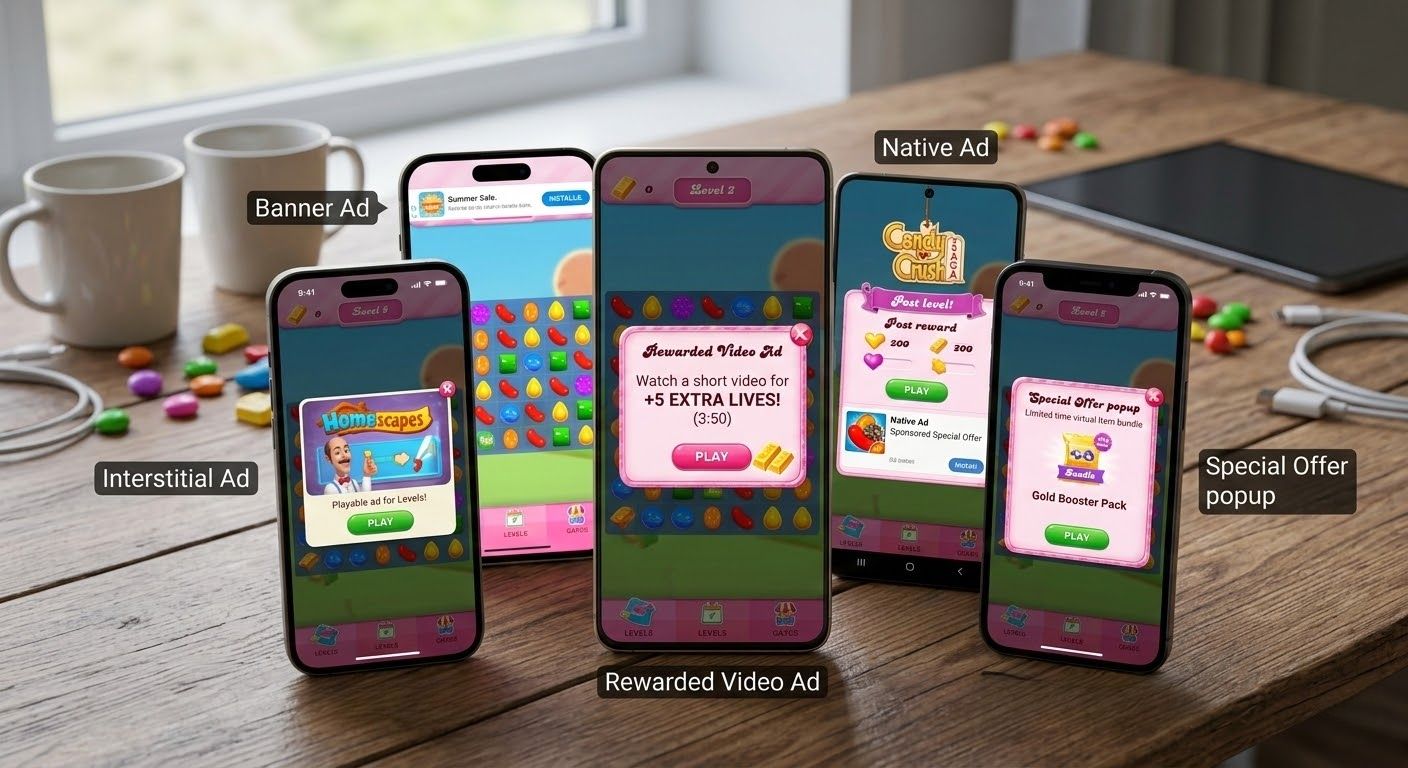
For example, Candy Crush players open the game dozens of times daily without thinking consciously about it, and each session lasts minutes only, sometimes just seconds. That adds up to massive ad views daily eventually, while news readers check headlines throughout the day constantly, morning, noon, and night.
Each scroll shows new advertisements automatically in feeds. Then, there are utility app users who use the app to solve problems quickly but return often because their needs repeat regularly. The large volume of free app users compensates for low per-user revenue in an ad revenue model.
Different Ads for Different Moments
Banner ads sit at screen edges, always visible but easily ignored over time, lowest paying by far
Interstitial ads fill entire screens between actions, hard to miss completely, higher paying generally
Rewarded videos offer bonuses for watching, with users choosing to view actively, highest engagement rates
Native ads match app design perfectly, blend in completely, and feel less interruptive to flow
In-App Ads: Pros and Cons
Pros:
No paywall means maximum downloads possible, with zero friction for users discovering you
Implementation takes days not months with ad SDKs available from major networks
Revenue scales directly with traffic volume as users grow over time naturally
Users never feel forced to pay for anything ever, with no pressure and no guilt
Cons:
Average revenue per user ranges one to three dollars only typically across most apps
User experience degrades with too many advertisements shown too frequently
Ad blindness develops as users learn ignoring banners completely over time
Revenue volatility follows ad market rates changing constantly with seasons
Best Candidates for Advertising
Hyper-casual games people play during short breaks everywhere, including bathroom, commute, and lunch
Content apps where users scroll through feeds continuously daily without thinking
News platforms delivering headlines throughout the day constantly as events happen
Free utility tools solving quick problems repeatedly for users with immediate needs
Social apps where engagement drives endless sessions naturally through feeds
If your app generates massive daily traffic but users resist paying directly strongly, then ads become an obvious choice for you now.
Professional mobile app development services handle this seamlessly for you without drama, as experienced developers integrate ad SDKs (Software Development Kits) that provide ready made app features preventing app load time and maintaining performance.
They build rewarded video systems where users choose watching for benefits willingly with engagement high, because the technical execution determines whether ads generate meaningful revenue or just annoy users away forever, with no middle ground.
Freemium vs Subscription vs Ads: Comparison Table
| Model | Best For | Pros | Cons | Average Revenue Potential |
|---|---|---|---|---|
| Freemium | Productivity tools, learning apps, utilities with power user segments | Massive user acquisition through viral growth, low barrier to entry, brand awareness builds quickly, users self-select into paying | Low conversion rates at two to five percent, high server and support costs for free users, free user churn after first week | Higher revenue per user than paid-upfront apps |
| Subscription | Streaming services, fitness apps, SaaS platforms, content libraries | Predictable recurring revenue, high customer lifetime value, trial conversion, deep user relationships built over time | User acquisition costs run high, must deliver continuous value to retain paying customers | Drives 65% of non-gaming app revenue globally |
| In-App Ads | Hyper-casual games, news apps, free utilities with high traffic | No paywall means maximum downloads, works at massive scale, multiple ad formats to test, users pay with attention not money | User experience fatigue from too many ads, low revenue outside gaming categories, click-through rates vary wildly, ad blockers reduce impressions | $208.76 billion global in-app ad spend |
How to Choose the Best Monetization Model for Your App
Analyze Your App Type and Category
Games lead with ads or freemium hybrids since players expect free entry. Utilities and productivity tools on the other hand fit freemium naturally as users outgrow basic versions and eventually pay for more.
Streaming and fitness apps need subscriptions because they deliver ongoing value that requires recurring payment. Match your model to what successful apps in your category already use.
Study Your Target Audience Behavior Patterns
US and European users accept subscriptions more readily since willingness to pay runs higher. While Asia Pacific audiences prefer freemium because willingness to pay is lower but usage runs higher. Watch how your potential users currently spend and note what friction stops them from purchasing.
Examine Your Market Competition Thoroughly
If competitors dominate one model, consider a hybrid that combines strengths instead. For instance, offer freemium entry like competitors but add ad-free subscriptions they lack.
Calculate Your Development Budget and Timeline Honestly
Subscriptions need a strong backend infrastructure for recurring billing. On the flip side, ads require SDK integration to maximize revenue while freemium demands careful feature gating with upgrade prompts at frustration moments. Your technical resources determine which model you can execute well.
Map Your Long-Term Growth Plan Five Years Out
Subscriptions build predictable recurring revenue that investors value highly. Freemium builds massive user bases that eventually convert, perfect for network effects. And ads generate immediate cash flow at scale, but per-user earnings eventually cap. You should consider all these factors in your app planning phase.
Test Hybrid Combinations for Maximum Results
You can use a combination of revenue models. Freemium entry with subscription upsells works across categories. Adding rewarded ads within freemium apps generates extra revenue from non-paying users. Even subscription apps can offer ad-supported tiers as hybrids consistently capture more value than single-model approaches.
An experienced app development agency guides these decisions, spotting pitfalls you might miss and recommending models proven for your category.
Build Your App with the Right Revenue Model
Choosing between freemium, subscription, and ads ultimately comes down to your specific app and who uses it. No single model works everywhere, which is why the top-grossing apps often combine approaches, mixing strengths, covering weaknesses, and maximizing revenue. What matters most is deciding early because your choice affects everything from feature design to backend architecture to user onboarding flows.
Or you can stop guessing which model works for your idea and partner with an expert app development company. We build scalable apps with the right monetization built-in from day one. Contact us for a free consultation on your app idea.
Frequently Asked Questions
What is the difference between freemium and subscription?
Freemium gives basic features away free while charging one-time or recurring payments for premium upgrades, whereas subscription charges recurring fees continuously for ongoing access, often after a free trial period ends and payments begin automatically.
What is the freemium model of subscription?
This hybrid approach offers a free version with limited features alongside a paid subscription tier that unlocks everything. Users experience value first through free access, then they subscribe for full capabilities later, converting naturally over time.
What are the three types of subscriptions?
The three main types are monthly recurring subscriptions, annual prepaid subscriptions with discounts, and freemium conversions where free users upgrade to recurring paid tiers gradually.
What is an example of a subscription-based model?
Netflix operates a pure subscription model where users pay monthly or yearly for unlimited access to the content library, while Spotify combines freemium free access with premium subscriptions for additional features and no advertisements.
Which app is best for managing subscriptions?
Rocket Money and Bobby help users track all their active subscriptions in one dashboard, and Truebill focuses on identifying and canceling unused recurring charges across payment methods, saving money monthly.